
A Generation That Doesn’t Have the Luxury of Waiting
Britta Velsko on power, quality, and why young fishermen aren’t sitting this one out

By Anna Nelson | The Quality Line
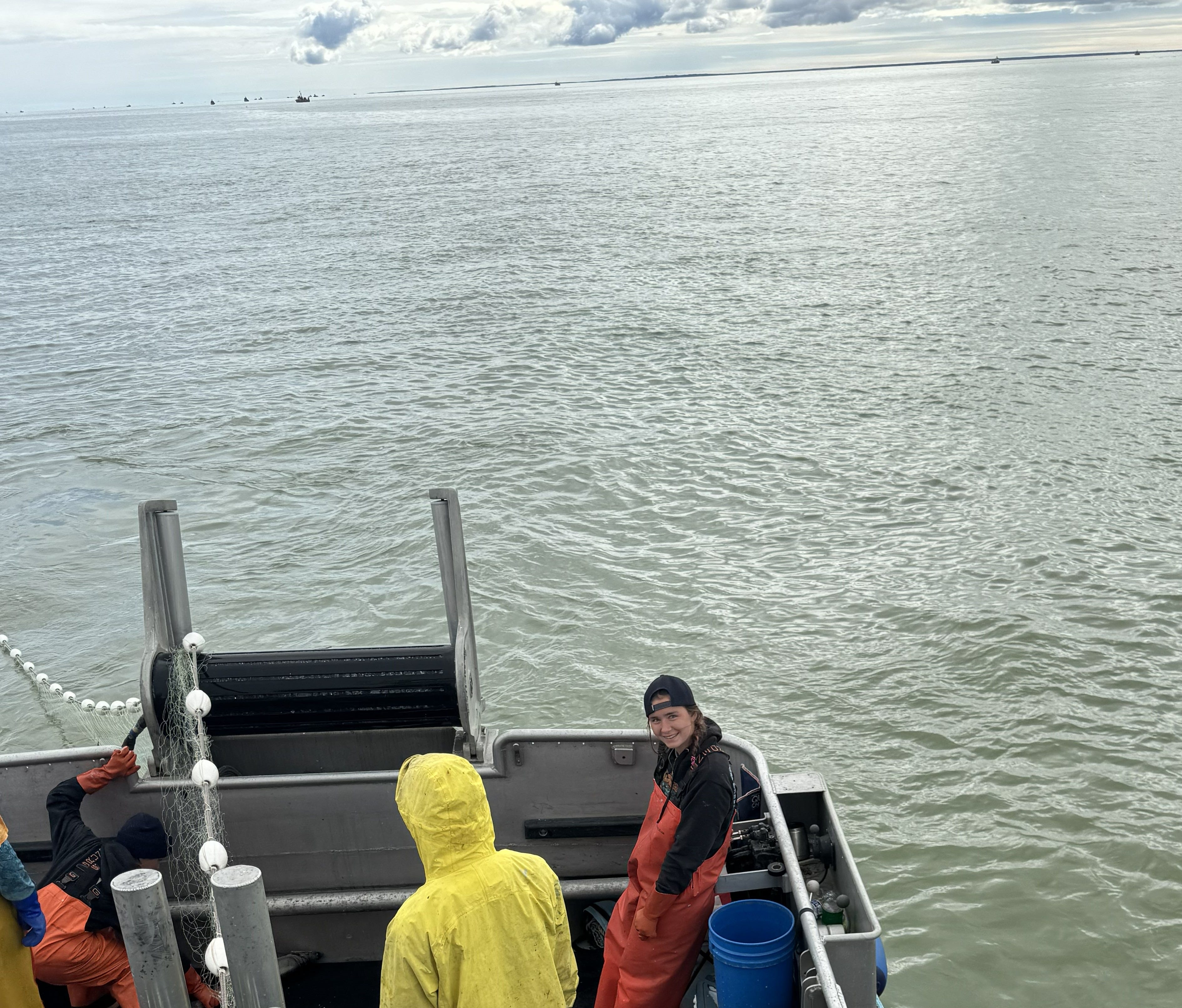
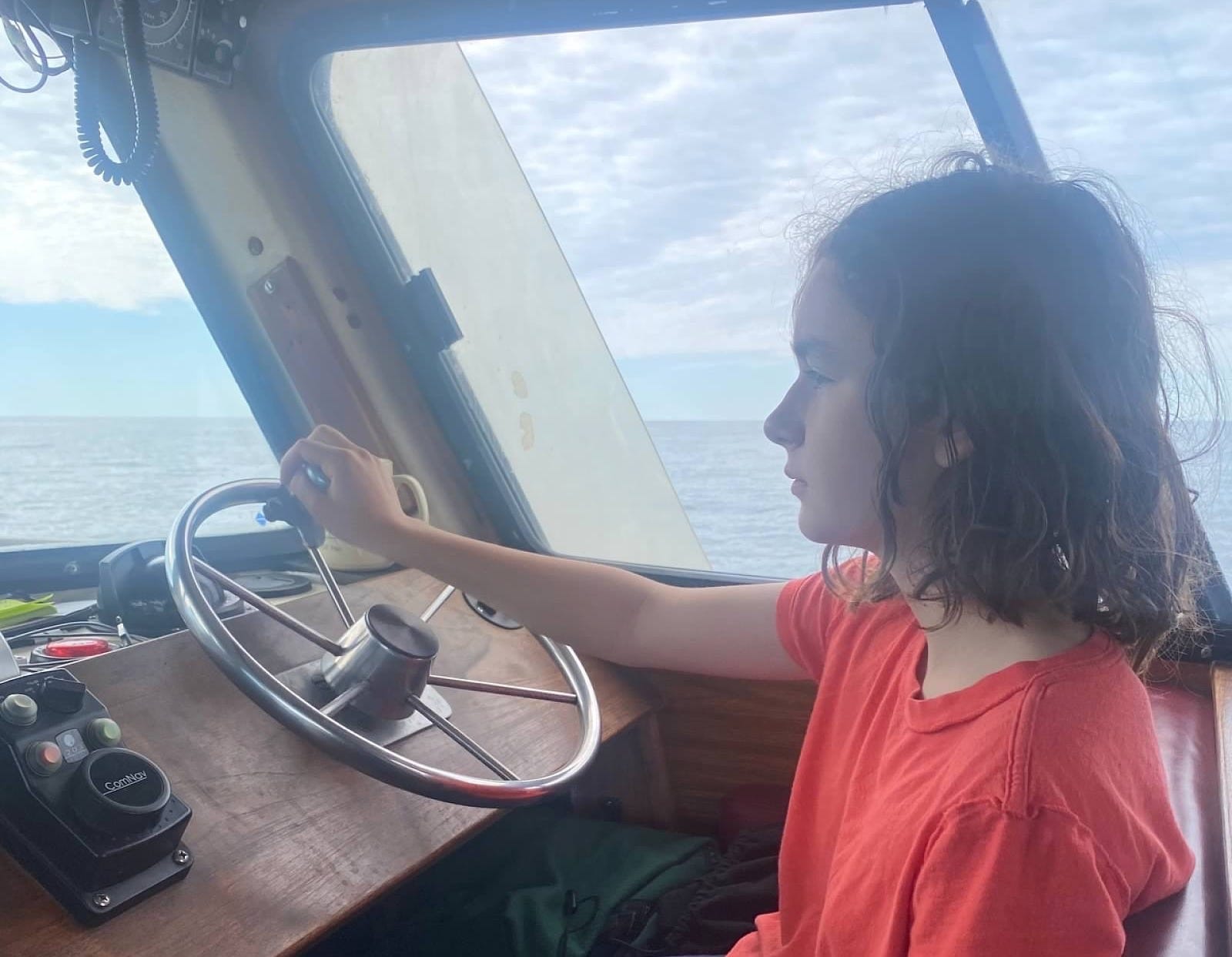
Britta Velsko is a seventeen-year-old fisherman from Homer, raised in a commercial fishing family with deep ties to Alaska’s fisheries. She grew up on boats, on docks, and inside the business side of fishing, watching seasons succeed and fail long before she was old enough to crew full-time. Today, as she looks toward college and her own future on the water, Britta represents a generation coming into fishing with clear eyes and very little patience for the way things have always been done.
If you’ve spent any time on the docks lately, you’ve probably felt it. The unease. Prices that don’t pencil out. Policy fights that seem to happen somewhere far above your head. A quiet question hanging in the air about whether there’s still room in this industry for people just getting started.
For Britta, that question isn’t abstract. She’s lived fishing from an early age, not as a visitor but as someone who’s watched the business side and the on-the-water side collide year after year through her parents’ work. From where she stands, the industry doesn’t feel steady.
“Honestly, the fishing industry feels unstable,” she says. “For years, I have heard of the collapse of the crab derby and the continual shortcomings of many other fisheries management. Most recently has been the debate on the allocated power of trawl vessels.”
What stands out in how Britta talks about it is how quickly she zooms out. This isn’t only about lost income or family stress, though those are real. “I really believe that greed has corrupted the morals of too many,” she says. “This is not just because of the implications for families such as mine. Our earth will also truly suffer at this rate.”
That mix of personal and planetary concern is common among young people coming into fishing right now. They aren’t just inheriting boats and permits. They’re inheriting a system under strain.
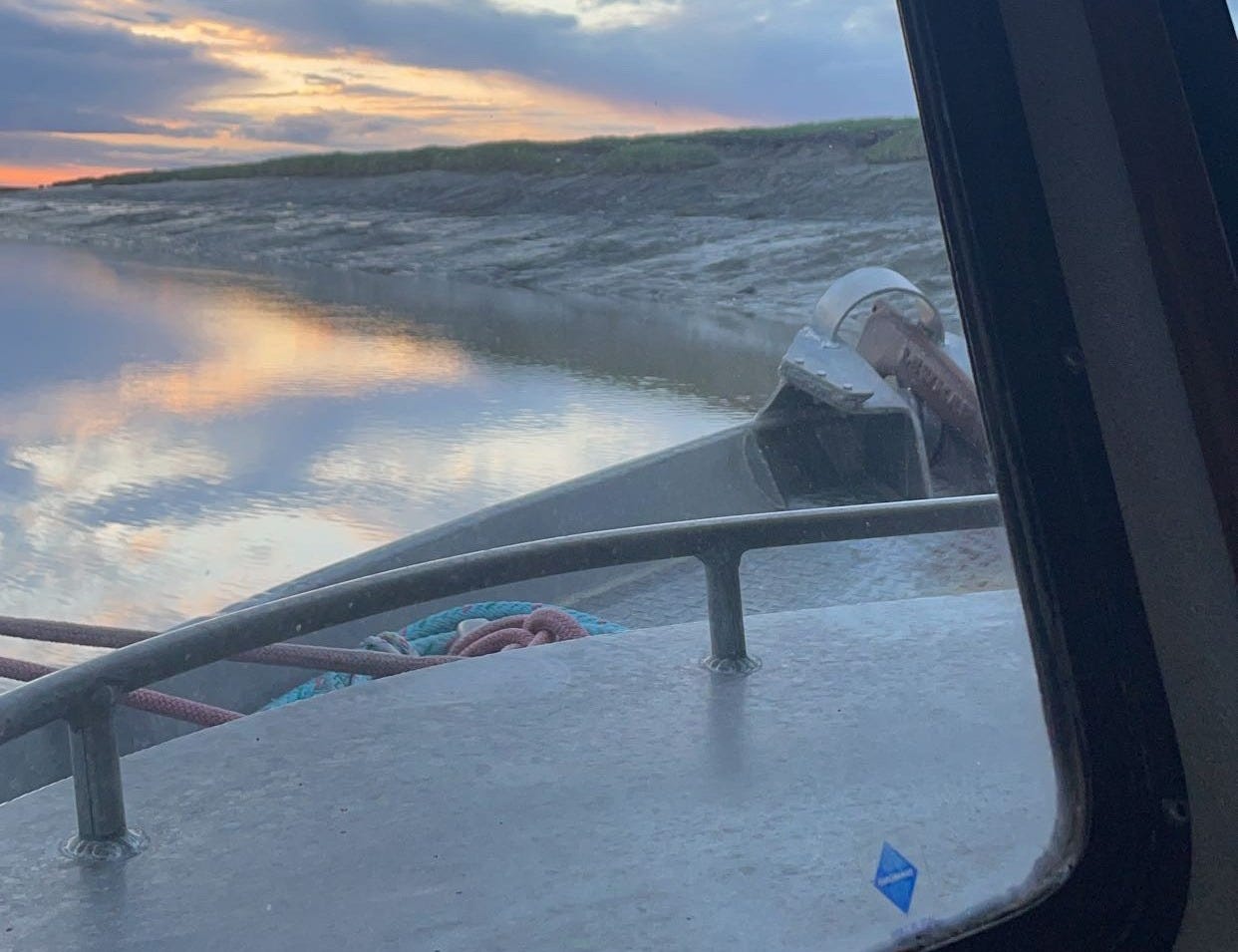
Growing up with your eyes open
A lot of people Britta’s age are weighing whether fishing is something they can realistically build a life around. She doesn’t frame it as a choice.
“I don’t see a choice for myself,” she says. “Being born into the industry, I have witnessed corruption and the continual failure on the part of corporations to provide for the average working family. I really believe that without the direct intervention of my generation, the industry will continue to suffer.”
That’s not romantic. It’s resolute.
Britta plans to study journalism, with the goal of using media to show what fishing actually looks like for working families. At the same time, she wants to stay on the water. “I hope to study journalism in college and use my education to depict an accurate picture of the average fishermen through the media,” she says. “I also aim to run a Bristol Bay gillnetter in the summers.”
That combination matters. Storytelling paired with firsthand experience. Someone who understands what it feels like to make decisions at sea, then explain those decisions to people far from the coast.
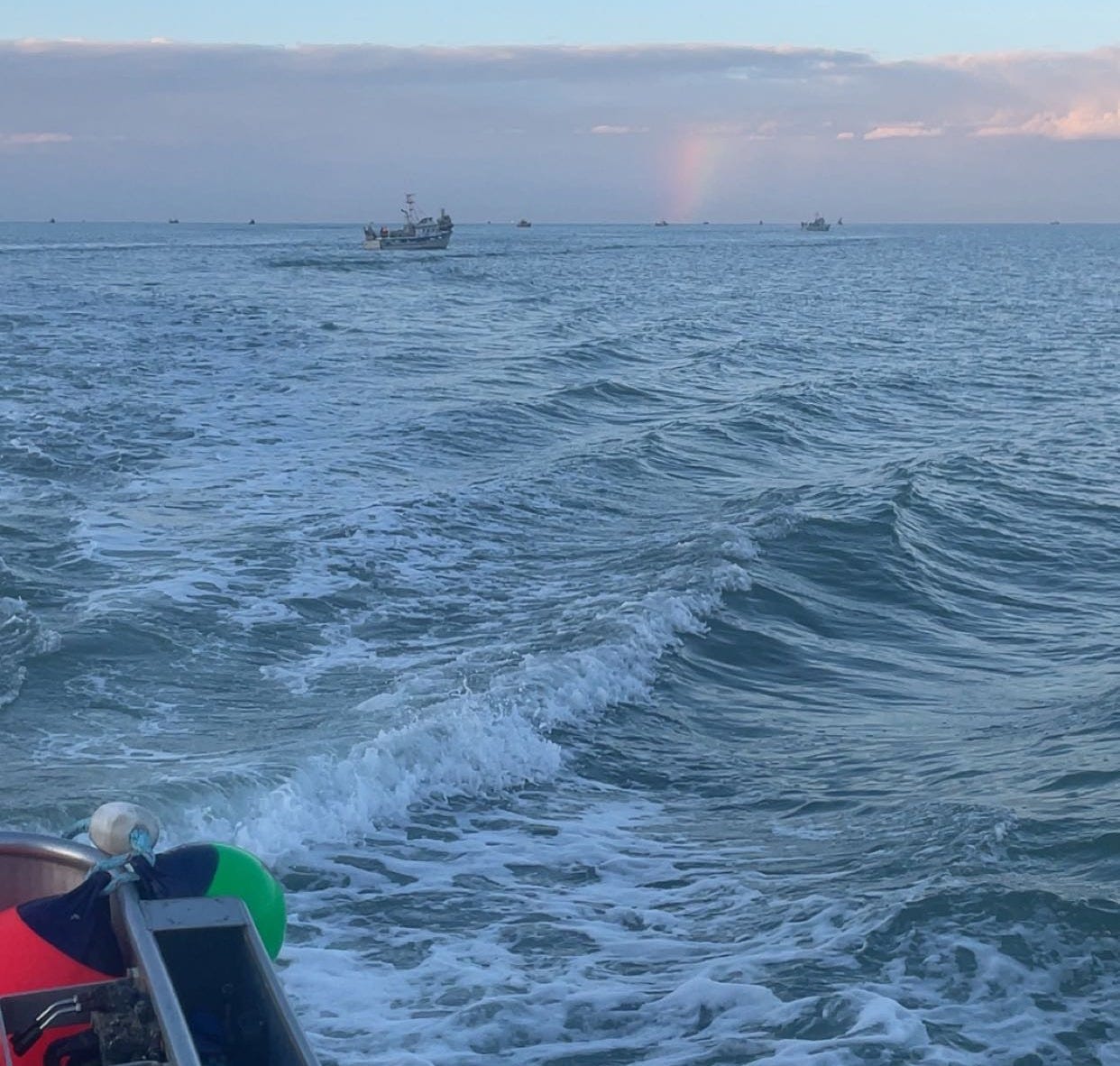
When quality becomes a line in the sand
Watching her parents build Kaia Seafoods around a quality-first model shaped how Britta defines good fishing. Not as a slogan, but as a way of operating.
“I see good fishing as fishing with the intent to positively contribute to the world, rather than to take advantage of the system,” she says. “Good fishing promotes and protects each part of the sea-to-table chain.”
In the current moment, she sees quality as something more pointed than a business strategy. “In this era, quality is virtually a symbol of resistance,” Britta says. “Even in trying times, the ability to produce consistently good-quality product sets a company apart.”
She connects that choice directly to sustainability and dignity. “Buying quality products also provides a more sustainable alternative to the consumer, and allows for the fisherman to live an honest, symbiotic life.”
That framing shows up again when she talks about generational differences. Younger fishing families, in her view, aren’t chasing volume because they’ve seen where that road leads. “I think that younger fishermen and fishing families view quality as being the priority,” she says, “whereas older generations designed the system with ‘success’ being defined as volume.”
For small and independent fishermen, that shift isn’t philosophical. It’s practical. Quality creates breathing room where volume has stopped working.
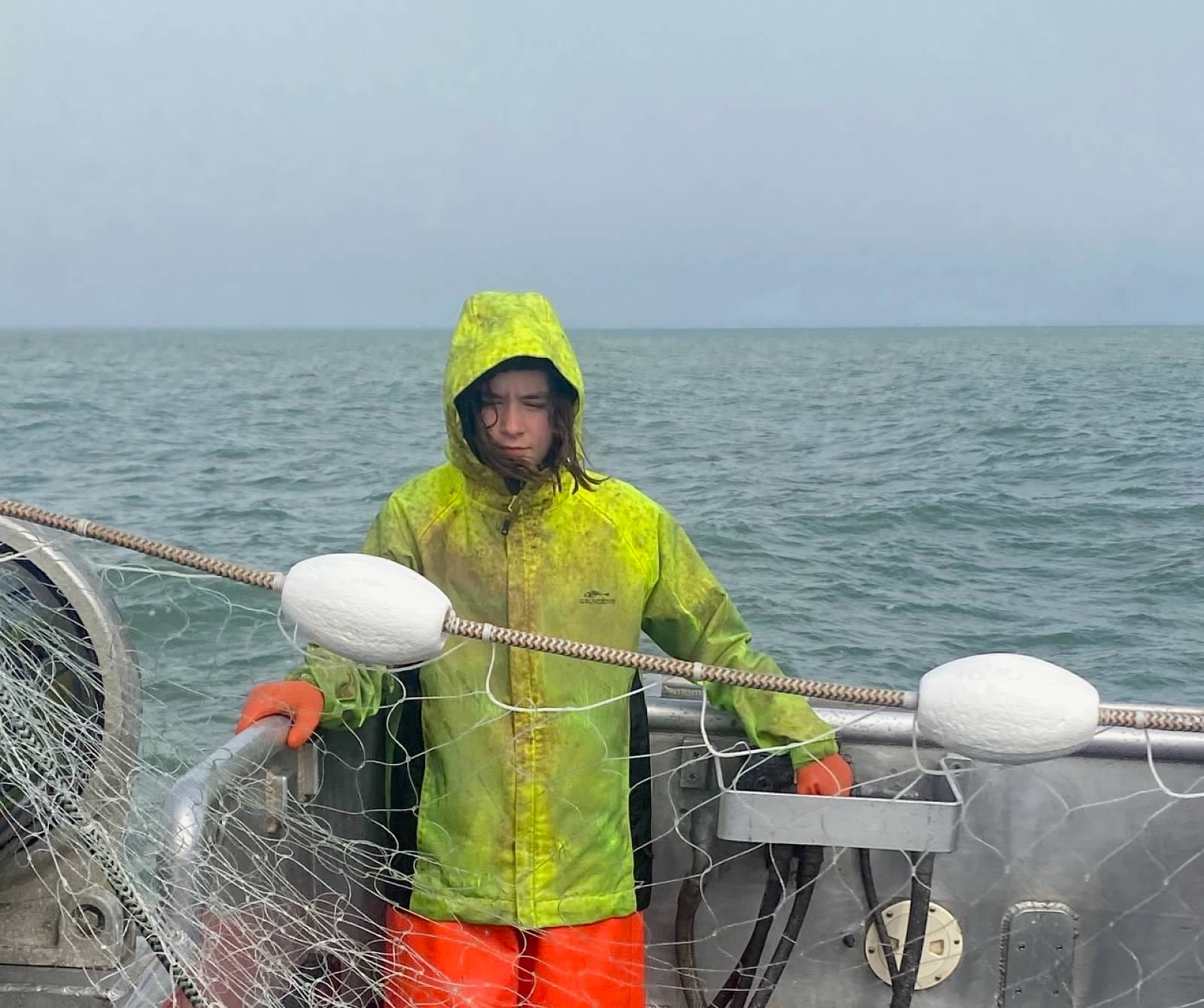
Being young. Being female. Being underestimated.
Britta is direct about what it’s like to be a young woman in fishing. She’s heard the reactions when she talks about running a vessel someday.
“I have received my fair share of laughs and stares,” she says. “However, they don’t really affect me. I probably started fishing before them anyway. Someday I will surpass them in experience and talent.”
What she notices more than the doubt is the change happening around her. “From just my short period of time in the fishery, more women than ever are entering the workforce,” she says. “I see this as very positive.”
When she talks about what she wishes people outside the industry understood, she doesn’t soften the message. “As Alaskans, we have no choice other than protecting our precious ocean,” she says. “The livelihood of Alaska would crumble if our oceans ceased to produce. It is my duty, and every young person’s duty, to preserve our waters.”
That sense of obligation shapes how she thinks about policy fights, especially around trawl expansion and Amendment 80. From her perspective, these aren’t abstract debates. They’re decisions that determine whether fishing communities still exist a generation from now.
What the next generation is asking for
When Britta imagines fishing communities 10 or 20 years out, she hopes to see real limits placed on large industrial pressure. “I hope to see tighter restrictions implemented on the Amendment 80 fleet,” she says, “and ultimately the termination of non-pelagic trawling in Alaska’s rich waters.”
At the same time, she’s clear about what she hopes doesn’t change. “I hope that the opportunity to fish Bristol Bay for teenagers or inexperienced lives on,” she says. Those early opportunities, she believes, are how Alaska’s values get passed on.
She’s also honest about what she’s learned watching her parents navigate hard years. “I have learned that at this point in time, deriving an honest living from fishing is not totally possible,” she says. Even deeply invested fishing families often need other work to stay afloat. That reality doesn’t scare her off. It sharpens her resolve.
If she could speak directly to other young people on the fence, she wouldn’t offer comfort. She’d offer a challenge.
“I would hope that other young people understand the absolute necessity of their contribution to the fisheries world,” Britta says. “Change will absolutely not happen without action as soon as possible. Upon entering the fishery with drive to create a sustainable living, you join a coalition of others dedicated to the same cause, and unity is paramount.”
For Britta, success isn’t about replicating the past. It’s about integrity. “For me, success is genuinity in each facet of the process of fishing and fish processing, from the legislation of fishing waters, to the power allotted to individual vessels, to honesty between the consumer and the seller,” she says. “Too many years have been spent disregarding these values.”
She believes Alaska can be a turning point. Not just for itself, but for fisheries everywhere.
If you’re fishing today, managing a harbor, working in policy, or raising kids around the industry, this is the question Britta leaves us with:
Are we making room for the next generation to lead, or just asking them to inherit what’s broken?
What are you seeing on your docks?
How are young fishermen and fishing families in your region talking about quality, access, and power?
Anna Nelson is a business and grant writing consultant specializing in commercial fishing businesses. She works with independent fishermen, fishing organizations, and seafood stakeholders to develop strategies for sustainability, market access, and industry resilience. Anna is the curator, editor, and one of the contributing authors to The Quality Line.